The heart of great barbecue is in the smoke, but one question arises more than almost any other: At what temp does meat stop absorbing smoke? This question isn’t just a curiosity—it’s the key to mastering flavor and texture when smoking any cut of meat. In this definitive guide, we dive deeply into the science, bust the myths, and reveal the practical techniques that will help you achieve outstanding smoky results every time.
If you’re new to the basics, start with our Ultimate Beginner’s Guide to Smoking Meat for foundational skills, then return here for a deep technical dive.
What Does “Absorbing Smoke” Really Mean?
Before pinpointing the temperature where absorption plateaus, it’s vital to understand what’s truly happening. When we say meat “absorbs” smoke, we’re talking about the process where smoke compounds such as phenols, carbonyls, and acids penetrate the meat’s surface and—depending on the meat and conditions—sometimes a bit deeper. This is what gives smoked meat its characteristic color, aroma, and rich complexity.
Smoke contact—with a moist meat surface especially—enables these reacted compounds to dissolve, forming that iconic smoke ring and infusing the bark or crust. But this process isn’t infinite, and it’s deeply affected by internal temperature, surface moisture, meat type, and smoke conditions.
For a primer on the chemical reactions, review our guide on the Science of Smoking Meat.
The Stages of Smoke Absorption in Meat
1. The Initial Phase: Maximum Absorption
Smoke flavor compounds are most readily absorbed when two factors are present:
The meat’s surface is moist
The internal temperature is relatively low—typically below 140°F (60°C)
In this period, the proteins are relatively loose and the meat has not yet begun to firm up. Water vapor on the surface helps smoke “stick”—emulsifying and delivering aromatic compounds into the outer layers.
2. The Stall: Enhanced Surface Reaction
Around 150-170°F (65-77°C), many large cuts undergo “the stall.” The meat stops rising in internal temperature for a long period. This is due to evaporative cooling from surface moisture loss. During this time, the bark forms, and smoke uptake is still significant, though the pace starts to slow.
For further detail on the stall and how to handle it, check our Common Mistakes to Avoid When Smoking Meat.
3. The Plateau: Reduced Absorption
After internal temperatures rise above 170-180°F (77-82°C), the meat’s surface dries out, proteins denature further, and fat begins rendering heavily. At this stage, continuing to add smoke isn’t as productive; most smoke compounds can no longer readily penetrate the surface layer, even if the meat continues to cook for hours.
A general consensus among seasoned pitmasters and barbecue scientists is that the bulk of meaningful smoke absorption stops when the meat’s surface hits about 140-150°F (60-65°C), but some superficial absorption continues up until about 190°F (88°C).
4. High-Temperature Limits: Virtually No Absorption
When meat surfaces exceed 200°F (93°C), protein fibers have coagulated, and the surface is almost entirely dried. At this point, the meat is mostly “protected” from further smoke infusion. Any additional smoke tends to accumulate on the bark only, not entering or flavoring the interior.
Smoke Ring Formation: Timing and Temperature
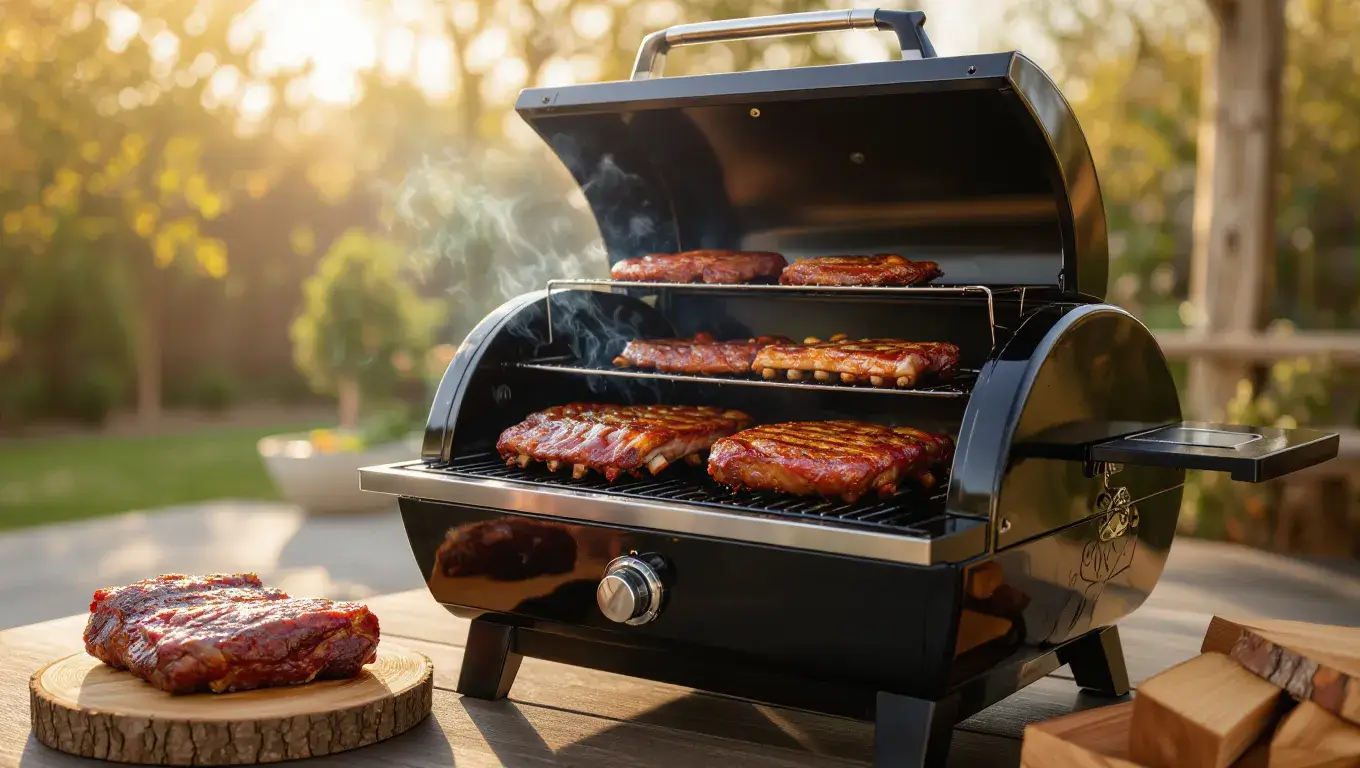
The famous “smoke ring” is a hallmark of classic barbecue, but its formation also helps us understand smoke absorption. Nitric oxide (NO) and carbon monoxide (CO) gases from burning wood interact with myoglobin in raw meat below 140°F (60°C) to lock in a pink hue. Once the meat’s surface goes above this temperature, it’s no longer capable of forming or deepening the smoke ring, reaffirming the importance of temperature timing.
For more on smoke rings and their chemistry, see our Science of Smoking Meat.
Factors Affecting Smoke Absorption Beyond Temperature
Surface Moisture
Smoke sticks to wet surfaces. If the meat dries out quickly, smoke exposure plummets. Spritzing with apple juice, water, or simply covering with foil can impact how long meat will remain able to gain flavor from smoke.
Type of Meat
Thicker cuts like brisket and pork shoulder can “take” more smoke because they have more time in the stall and lower surface temperatures for longer periods. Leaner, thinner cuts (chicken breast, fish, ribs) reach higher temperatures faster and stop absorbing smoke sooner.
Explore optimal meat cuts and their smoke-friendliness in our Top 10 Meats to Smoke guide.
Smoke Density and Quality
White, billowy smoke carries creosote and can cause bitter taste—regardless of temperature, over-smoking is always a risk. Clean, blue smoke delivers the ideal compounds. Using the right wood and good fire management are crucial.
Discover more in our Wood Selection Guide.
Amount and Duration of Smoke Exposure
After the meat surface is “sealed” by heat and the bark forms, further smoke exposure (even via smoke bombs or extra chips) will mostly darken or harden the bark, not infuse deeper flavor.
When Should You Stop Adding Wood?
Pitmasters usually add wood or chips only in the first half or less of the cook, especially for large cuts. The first 2-4 hours maximize smoke exposure. Afterwards, let heat finish the cooking. Wrapping meat locks in moisture and further limits smoke penetration.
For detailed timing, visit the Brisket Guide and Rib Smoking Guide.
How Temperature Control Affects Smoke Absorption
Keep your pit between 225-250°F (107-121°C) to lengthen the window for smoke uptake. Spikes above 275°F (135°C) dry the surface and reduce absorption.
For essential smoking gear, see Smoking Equipment Guide.
Can Any Meat Absorb Smoke After 200°F (93°C)?
Meaningful smoke absorption stops above 200°F (93°C) because the surface is dry and sealed, most fats are rendered, and no liquid phase remains for smoke molecules to interact with. Flavor beyond this comes from browning and caramelization, not further smoke penetration.
Is More Smoke Always Better?
Definitely not. Over-smoking leads to bitter or acrid meat. Mastering when to stop is as important as how to start.
See more pitfalls in Common Mistakes to Avoid When Smoking Meat.
Meat Types and Their Absorption Thresholds
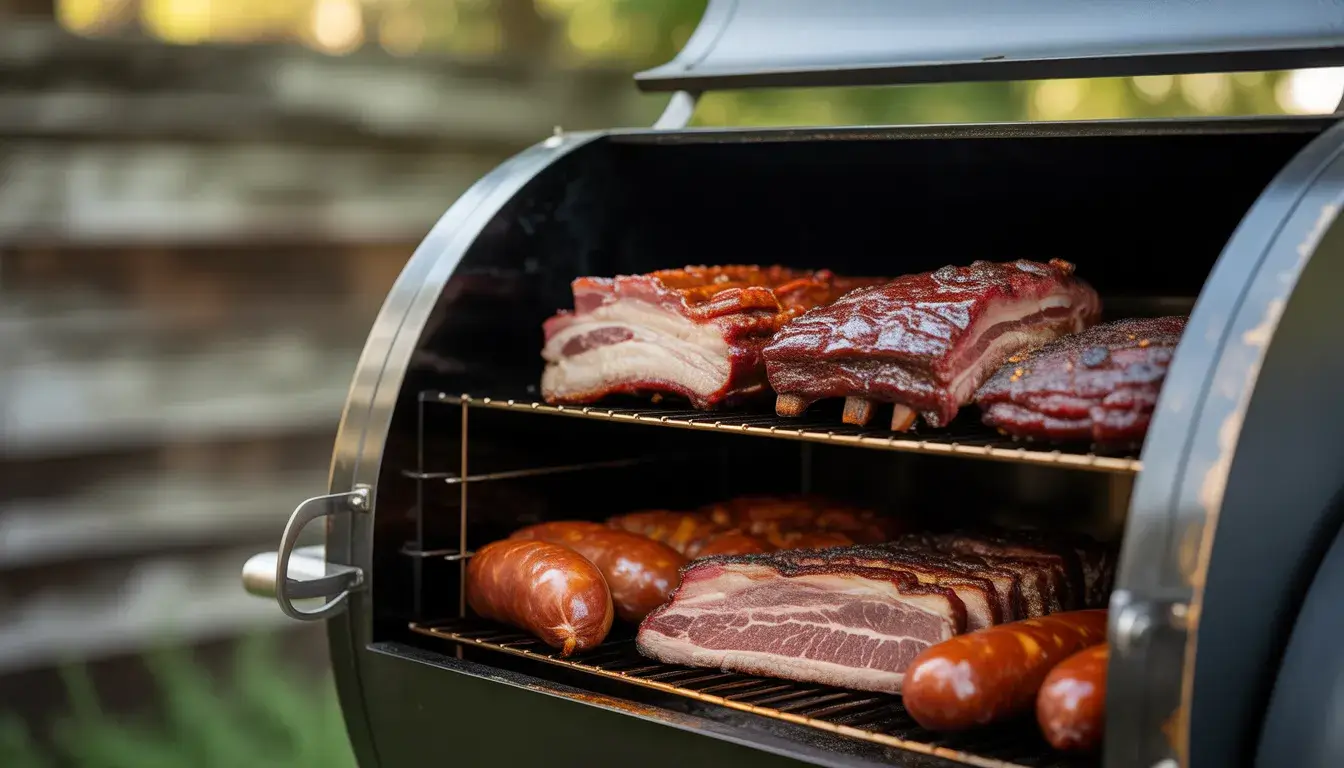
Beef Brisket and Pork Shoulder
These cuts are fatty and thick, spending the longest time below 150°F (65°C)—the best window for deep smoke flavor. A brisket might absorb smoke for 4-5 hours.
Poultry
Chicken and turkey heat fast. Their surfaces seal off smoke flavor after 60–90 minutes.
For poultry advice, see the Beginner’s Guide.
Ribs
Being thin, ribs get their smoke in the first 2–3 hours. Wrapping or basting can extend this.
Get rib techniques from the Rib Smoking Guide.
Fish and Seafood
Fish, smoked at low temperatures, absorbs smoke quickly—usually only 30 minutes to 2 hours.
Best Practices to Maximize Smoke Absorption
Start meat cold to extend the absorption window. Spritz or baste for surface moisture during the first half of the cook. Keep the pit steady at 225–250°F. Use thin, blue smoke, not thick or white. Wrap meat when bark forms to lock moisture and stop smoke absorption.
Find more advanced tips in Common Mistakes to Avoid When Smoking Meat.
Common Myths About Smoke Absorption and Temperatures
Myth 1: Meat Absorbs Smoke Throughout the Entire Cook
Most smoke flavor is taken on below 140–150°F (60–65°C). After that, the surface seals and absorption stops.
Myth 2: Thicker Bark Means More Smoke Inside
Bark color comes from long surface exposure, but interior smoke flavor is determined early in cooking.
Myth 3: Soaking Wood Means More Smoke Penetration
Soaked wood makes more steam, not more smoke flavor. Use dry, seasoned wood.
Learn more in the Wood Selection Guide.
How to Time Smoke Application for Different Meats
Brisket and Pork Shoulder
Smoke heavily in the first 4–5 hours or until the bark is set and internal temp is near 150-170°F (65–77°C). After this, wrap the meat or reduce wood.
Poultry
Smoke for 1 to 1.5 hours, then finish cooking with indirect heat.
Ribs
Use the “2-2-1” or “3-2-1” method: smoke in the first two-to-three hours, then wrap.
Environmental Effects: Weather, Humidity, and Altitude
High humidity keeps meat surfaces moist longer, extending the absorption phase. Rain or cold slows things down, sometimes lengthening smoke absorption. At altitude, water boils at lower temperatures, so the stall lasts longer.
Quick Reference Table
| Cut | Absorption Stops | Effective Smoke Time |
|---|---|---|
| Brisket | 150-170°F (65-77°C) | 3-5 hours |
| Pork Butt | 150-170°F (65-77°C) | 3-5 hours |
| Ribs | 160-165°F (71-74°C) | 2-3 hours |
| Chicken | 140-150°F (60-65°C) | 1-1.5 hours |
| Turkey | 140-150°F (60-65°C) | 1.5-2 hours |
| Fish | 120-140°F (49-60°C) | 0.5-1.5 hours |
When Exactly Does Meat Stop Absorbing Smoke? The Verdict
Most absorption occurs before the meat’s surface reaches 140–150°F (60–65°C). Some superficial absorption continues up to 170–180°F (77–82°C). Above 200°F (93°C), smoke infiltration is negligible.
To maximize flavor, focus on smoke exposure in the first hours while the meat is still cool and moist.
For more on managing cook times and bark formation, visit the Beginner’s Guide.
Where to Go Next
Apply these principles with our specialty guides:
Ultimate Beginner’s Guide to Smoking Meat
Brisket Smoking Guide
Step-by-Step Guide to Smoking Ribs
Common Mistakes to Avoid When Smoking Meat
Wood Selection and Pairings
Comprehensive Smoking Courses
Conclusion
Knowing at what temp does meat stop absorbing smoke is vital for making great barbecue. Focus your smoke in the cool, early stage. Control your pit temps and humidity, and don’t overdo it on wood. Perfecting these elements is the key to consistently mouthwatering, smoky meat.
Continue your quest for smoke mastery with more guides and resources linked above. Happy smoking!