???? Introduction
Smoking meat is one of the oldest and most revered cooking techniques, blending fire, wood, and patience to create unmatched flavors. Unlike grilling, which relies on direct heat, smoking is a low and slow process that infuses meat with deep, smoky aromas while gradually tenderizing tougher cuts.
Whether you’re smoking a brisket, ribs, or even fish, understanding the fundamentals of smoking is crucial to mastering the art. This lesson will break down what smoking meat is, how it works, and why it’s an essential technique for BBQ lovers.
???? What is Smoking Meat?
Smoking meat is the process of cooking and flavoring meat using indirect heat and the smoke from burning wood. The goal is to slowly break down connective tissues, retain moisture, and develop a rich smoky flavor that cannot be achieved through grilling or roasting.
How Does Smoking Work?
The smoking process relies on three key elements:
- Heat – Maintains low temperatures (typically 200–275°F / 93–135°C) for slow cooking.
- Smoke – Penetrates the meat, infusing it with flavor.
- Time – Long cooking periods allow the meat to become tender and juicy.
When these three elements are perfectly balanced, the result is meat that’s incredibly flavorful, juicy, and fall-apart tender.
✅ Hot smoking = Cooks and flavors the meat at 225–275°F (107–135°C).
✅ Cold smoking = Adds flavor without cooking at below 85°F (29°C).
???? Why is Smoking Meat So Popular?
Smoking isn’t just about cooking—it’s about craftsmanship, patience, and precision. The method has been used for centuries to preserve and enhance meat, and today it remains the foundation of Texas BBQ, Carolina pulled pork, and countless other regional traditions.
The Benefits of Smoking Meat:
✔️ Unmatched Flavor: Smoking infuses meat with deep, complex flavors that can’t be achieved with other cooking methods.
✔️ Tenderizing Effect: The low and slow process breaks down tough muscle fibers, creating juicy, fall-apart textures.
✔️ Natural Preservation: Before refrigeration, smoking was used to preserve meat for long-term storage.
✔️ Versatility: You can smoke a variety of meats, including brisket, ribs, pork shoulder, poultry, and even fish.
???? Fun Fact: Traditional BBQ regions like Texas, Kansas City, and Memphis each have unique smoking styles based on wood selection, seasonings, and techniques!
???? The Science Behind Smoke and Flavor
Smoke isn’t just about heat—it’s a flavor enhancer. Different woods create different flavors, giving you endless possibilities for customizing your smoked meats.
How Does Smoke Affect Meat?
When wood burns, it releases chemical compounds that interact with meat’s surface:
- Syringol & Guaiacol = Create the signature smoky flavor.
- Lignin & Cellulose Breakdown = Produce aromatic compounds that penetrate the meat.
???? Thin, blue smoke = Ideal for clean, flavorful smoking.
???? Thick, white smoke = Can create a bitter, unpleasant taste.
???? Pro Tip: Always use seasoned hardwoods like oak, hickory, cherry, or apple to create balanced smoke flavors!
???? The Role of Bark and Smoke Ring
One of the hallmarks of great smoked meat is the bark—the dark, flavorful crust that forms on the meat’s surface.
How is Bark Formed?
Bark is the result of seasonings, smoke, and meat juices caramelizing over long cooking times. It adds a rich, smoky crunch that contrasts perfectly with the juicy interior.
Another sign of expert smoking? The pink smoke ring—a chemical reaction between smoke gases and the meat’s surface, creating a beautiful pink hue just beneath the crust.
✅ Thicker bark = Lower humidity + longer cooking time.
✅ Deeper smoke ring = More exposure to fresh smoke in the early hours.
???? Pro Tip: Avoid wrapping meat too early to allow full bark formation!
???? Smoking vs. Grilling: What’s the Difference?
| Feature | Smoking | Grilling |
|---|---|---|
| Cooking Method | Indirect heat & smoke | Direct high heat |
| Temperature | 200–275°F (93–135°C) | 350–600°F (177–315°C) |
| Cooking Time | 4–16 hours | 10–30 minutes |
| Meat Texture | Tender, fall-apart | Juicy, seared crust |
| Best for | Brisket, ribs, pork shoulder | Steaks, burgers, chicken breasts |
???? Key Takeaway: Smoking is all about slow-cooked perfection, while grilling is focused on quick, high-heat searing.
???? Getting Started: What You Need to Smoke Meat
To start smoking meat, you’ll need three essential tools:
1. A Smoker or Grill
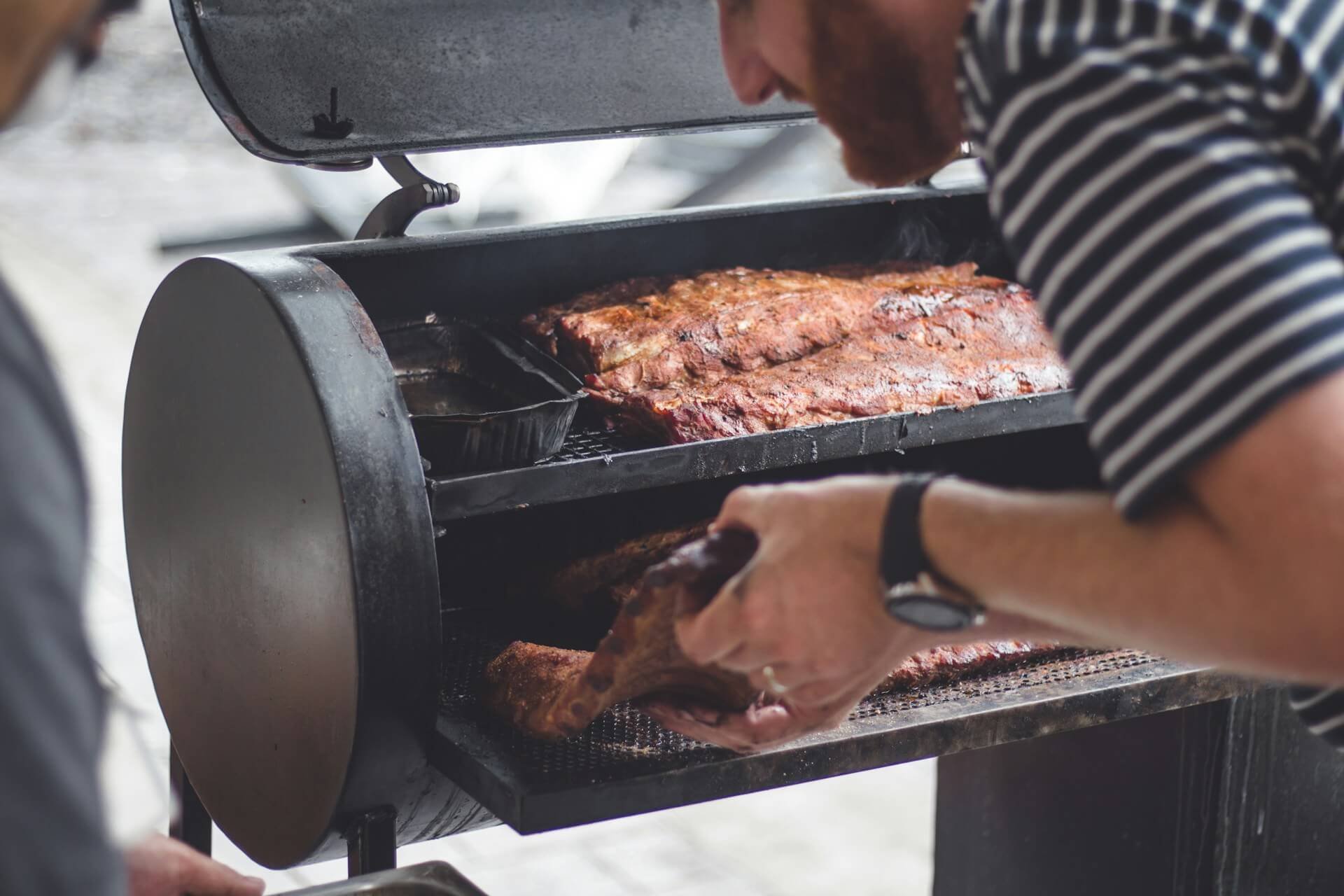
You can use a dedicated smoker or a charcoal grill with a 2-zone setup. The most popular smokers include:
- Offset Smokers: Classic choice for Texas BBQ.
- Pellet Smokers: Easy-to-use digital control systems.
- Charcoal Smokers: Authentic flavor, but requires monitoring.
2. Quality Wood for Smoke
Each type of wood produces different flavors:
- Oak & Hickory: Strong, bold smoke for beef.
- Apple & Cherry: Mild, sweet smoke for poultry.
- Mesquite: Intense, earthy smoke for Texas-style BBQ.
???? Tip: Avoid softwoods (pine, cedar) as they produce bitter, resinous smoke.
3. A Reliable Meat Thermometer
Smoking is all about temperature control, so invest in a good digital thermometer to ensure your meat reaches perfect doneness.
???? Recap: Key Takeaways from Lesson 1
✔️ Smoking is a slow-cooking method that infuses deep, smoky flavors into meat.
✔️ It differs from grilling by using low indirect heat and long cooking times.
✔️ The right balance of heat, smoke, and time creates perfect BBQ.
✔️ Using quality wood and controlling temperature are key to success.